


















Listen on your favorite app


.svg)
.svg)
.svg)

Introduction
This episode explores how everyday brands can create “lifestyle loyalty” by connecting with customers’ values and routines, not just offering discounts or points. Using examples such as Unbound Merino, Thuma, Walmart+, T-Mobile, Nike, and grocery retailers, hosts Rachel Satow and Ian Andersen explain that lasting loyalty comes from emotional relevance, authentic positioning, useful partnerships, and benefits that fit customers’ broader lives.
Brands should begin by identifying the functional reason people buy from them, then map the surrounding needs—such as saving time, feeding a family, staying healthy, or traveling efficiently. Existing customer data can help brands offer useful content, tools, communities, and experiences instead of relying solely on coupons.
The strategy requires organization-wide alignment and a long-term focus on customer lifetime value, but it does not demand an immediate overhaul. Companies can start small with targeted emails, meal-planning resources, or local partnerships, test engagement, measure their share of customers’ routines, and scale successful ideas over time.
Transcript
[00:00:00] Welcome to Travel Buddy, presented by Switchfly. In this podcast, we talk about all things travel, rewards, and loyalty. Let's get to it.
Brandon Giella: we're talking about how everyday brands can build lifestyle loyalty. And I wanna start with two examples of what we're talking about here. Because we wanna connect that when you- when we think aspirationally, and again, this is aspirational, about the ways that brands can build loyalty in a deeper sense of loyalty beyond just discounts and points redemptions on certain products. There is a deeper philosophical view that consumers have, and the greatest brands on Earth connect deeply with those views as best you can. Not every brand has the budget, sometimes not the product or service to be able to really, capture this, so we understand that and acknowledge that. But I think there's some really deep, emotional resonance that you can have with [00:01:00] buyers, and I think that ties directly into a loyalty brand.
And so my example when we were thinking about this episode was a company called Unbound Merino. if you guys are deep on the Reddit community of the One Bag travel experience, r/OneBag, everybody talks about Merino wool because it's very light, it's packable, it wicks moisture, it doesn't smell, theoretically. And so you can wear one outfit for a whole week. You know, you just air dry it at night in your hotel room, and boom, you've got one tiny little bag with one outfit, maybe two, you're good to go. So, that's an extreme case, but it's really captivating for me, and I'll tell you why. Because I have this worldview that I want less stuff. I want less stuff because the world feels chaotic. I have a three-year-old and a one-year-old, and sometimes I just want to not think about anything, including changing my clothes or what kind [00:02:00] of clothes I'm wearing, 'cause I am just so overwhelmed, as many people, you listening might feel the same way. Merino wool, you should check it out. Unbound Merino, not sponsoring this episode. Great brand, seemingly.
so I love how your, your comment of wanting less stuff is accompanied by you wanting to buy this new thing. Like, this buying more things is gonna help you have less stuff. Yeah.
Hello, it's called marketing. but yes. But that is, that is the irony that is my life and pretty much everybody that buys things, I would say. yeah, no, so it is. And not only is it buying more stuff, it is buying the most expensive $120 shirt you could possibly imagine. So yeah, it's, it's not ideal. It is ironic. But this is, this is how you tell a great story and you connect to these deeper things. And I think if you can do that well you build this community [00:03:00] around people that are, you know, one-baggers who love Merino wool, I think there's like real opportunities to build the kind of loyalty that we all aspire to in our, in our efforts and our programs. And so that's one example that sets the context for this episode. But, Rachel, you were talking before we started recording about another brand that gets you thinking about this topic as well. So talk to me about that.
Rachel Satow: Yeah. and e- before I dive into my example, Ian's definitely gonna judge me too for this one, and has already shamed me offline for it. but so for, for our listeners, it's kind of been trickled out before. I have just purs- purchased a new home. we are currently undergoing a ton of renovations, and with that usually comes, just like an aesthetic overhaul of some of the furniture that you have and the lighting that's there, etc.
And one of the things that we have been considering is a new bed frame, just something to, you know, replace one that was difficult to put together, was very, you know, [00:04:00] it's going to be a pain in the butt to move. It's, loud, it's, like, uncomfortable, and frankly, it's a metal frame one that is not gonna last forever.
so in that process, and in aligning it with the, the aesthetic side of it, we're looking at a brand called Thuma, which has, the traditional Japanese joinery, acacia wood frame, that boasts, you know, not only that's su- sustainable, sustainably sourced, but it's also, you know, easy to put together.
It... The longevity of the product is, is there, and it does come with, like, a fairly large sticker price in comparison to some of its competitors, which also have the, the, the same style. However, one of the things that I think Thuma does right is it really puts that message, that, like, lifestyle aspect f- first and foremost in their, in their messaging.
A lot of it has to do, yes, with the aesthetic of the bed, but it also aligns with, [00:05:00] you know, I want to make sure that I'm purchasing something that doesn't contribute to additional waste or isn't, you know, unsustainably sourced or something along those lines. And whether or not that is 100% true of this brand, they do a good job of trying to communicate and align with those things that I'm also looking for outside of the fact of, oh, I just want a bed frame that has a mid-century modern look.
It really does kind of, like, connect into people who are looking to make a purchase like this are also probably aligning with this other greater world view, and if they aren't already, maybe we can convince them to. and also, you know, it justifies the sticker price a little bit more. So that's my, that's my example, similar to yours with, you know, the $120 shirt, and it really does kind of like showcase that some of these brand, brands are starting to align with a messaging and a, a product, outlook of just going [00:06:00] beyond, you like this because it's mid-century modern.
You like this because the material is nice on your skin, etc.
Brandon Giella: And it's also beyond, and I, I think this is, you know, thinking about our, our first segment here. It, it goes beyond just a discount or just a, you know, workflow in the customer journey of how people move through and then how they can, you know, redeem their points. gets into the operations, you know, the values of the company.
It gets into suppliers. It gets into a lot of other aspects of the business. So all granted, and we're all noting that we did just talk about the two most premium brands within the categories that we're talking about. But all that aside, and all that as a given, I think connecting to that deeper level is something that is really important and really valuable for a lot of brands out there thinking about their loyalty programs.
Ian Andersen: you made a comment real quick there that, that made me think, something that, that I've been noodling on as far as, [00:07:00] like, discounts. Discounts drive the next purchase, right? where, kind of the lifestyle loyalty is, is building a longer-term relationship, and sometimes that can mean, sacrificing, like, highest potential ROI on any given campaign or, or product line. it might eat into margins at times, right? But the, the goal really is to, to maximize the customer lifetime value, of, of a particular, particular customer. for some that's sort of built into the business model. You know, things like Rolex or Ferrari or, you know, We just got off vacation and my wife, Rachel even mentioned seeing on Instagram my wife's new Balenciaga bag. You know, like something that I would never in a million years [00:08:00] purchase for myself or think to purchase But, because of the, the way this company has, like, developed itself, the, the pro- the quality of the product, the aura of what it is, you know, they have created, you know, a whole market for, of, of women like, and men like, people like my wife who, are going to be shopping there, you know, when we can for rest of our lives, I'm sure, to, to one degree or another. and so it's, it's really trying to find a, a balance between maximizing every single marketing effort, maximizing ROI, versus finding those points to which you can, either, know, whether it's the messaging or whether, like you're saying, whether it's operationally, make some [00:09:00] tweaks to, to change your company/marketing to, to be a little bit more lifestyle-focused
Rachel Satow: Yeah. And I think one of the things that I'll add about all of the brands that we're talking about is, to Ian, your point, they do already align with, with a certain lifestyle, with a certain aesthetic, with a certain, customer profile, right? And like, for example, if someone w- if, if, I don't remember the, the wool name you said, but the Merino wool shirt and the brand that you were, were talking about, Brandon, they likely already know that their ideal customer is someone who is a, a, a one bag tripper, and they probably also align very well with the adventurers of the world, people who like to travel and explore outdoors because it is a very sturdy product.
that brand would have a, a nice little opening to slot in rewards that [00:10:00] go beyond, oh, you can redeem for a free shirt, or here's, you know, you know, a, a, a different type of product that we can add in as a, as a thank you. They already can expand their rewards catalog to align with travel rewards because of the type of person that they are targeting for their product.
I think one of the biggest challenges is, like, we know that there are brands that already fit into these categories, entertainment, recreation, everything within, with, with brands that align already to things that people are doing outside of work. The brands that struggle with this are things like grocery and fuel and convenience stores and household products because they are usually framed in the consumer's mind as task-oriented brands.
They need to clean their house, so they need this product. they may value them highly without [00:11:00] feeling very personally connected to a specific type of brand, but that doesn't mean that those everyday categories lack that emotional connection or that lifestyle alignment. It just means that they need to find that lifestyle alignment.
For example, like, I use the, the Meyer's brand for my cleaning products. Do I think that
Brandon Giella: just thinking about them
Rachel Satow: yeah, do, do, do I think that, like, this cleaning product... Do I th- do I think about this cleaning product and the... Like, when I'm not using it? Not really, un- le- except in this exact moment. but that is a household purchase.
That is a task-oriented purchase that I have made, but I chose that brand, again, whether or not their, their marketing holds 100% true, but I chose that brand because it aligns with the, the view that I have that I want products that are naturally sourced or at least a little bit better for me than heavy chemicals.
So they [00:12:00] market in a way and they align with that lifestyle aspect in a way that I think many brands can start to just reframe the way they think about how people are actually interacting with their company
Ian Andersen: I think that's, that's a really good point. And two, two points I wanna make on that. The, the first is like it can be difficul- you know, you mentioned cleaning products, but it- but others like, like gasoline or, or just sort of everyday household items. the, the with or the trouble with, with creating the sort of lifestyle loyalty program around it is, is they're just such interchangeable goods, right?
Like g- gas at your local BP is literally the exact same as gas at local Conoco. So like price is your only differential. and when the price points are so relatively static when, you know, you might get a couple of pennies,from gas stations across the street [00:13:00] from each other off, they're, they're generally gonna be pretty, pretty close. So, how do you go about differentiating yourself,to create that sort of lifestyle loyalty? And a brand I think does a really good job of that, thinking about sort of common household everyday items is Johnson & Johnson. they've really spent, what, the last 40, 50 years or so trying to separate themselves from, competitors as a like I don't know what you'd even call it necessarily.
A, a family-oriented, like, gentle, you know, pro-environment, pro, like, people-ish kind of brand, even though what they, what they ... I mean, and they're a g- a ginormous company, right? They make a ton of different stuff, but, what they do make is relatively, you know, comparable to the exact same stuff their competitors make, [00:14:00] right?
It's not, like I mentioned earlier, it's not a Ferrari where the, the quality i- is the def- differentiator. It is, really the, the way the company has positioned themselves. and I think you're seeing a lot of that more in brands that you, you know, five, 10 years ago we would have never mentioned in lifestyle loyalty space, like Walmart. And, you know, I was actually looking recently at the, the Walmart's Plus stuff if you, if you go with them and, and the fact they're bringing in everything, like fuel and services and travel bookings and, you know, a whole bunch of different things, they're really trying to create a, a, a sort of, like, we'll-take-care-of-everything sort of experience for you, right?
Like, we will, like, we will be your first stop for pretty much every [00:15:00] purchase you need to make, and whether or not that purchase is directly with Walmart, they want to be that gatekeeper and, and at least, like, help and direct you to it. So, there are plenty of ways to kind of go about this, even if you're not necessarily a brand that has a clear differentiator, or a, or a product that aligns itself to, to massive differentiation.
Rachel Satow: Yeah. I love that example of Walmart+ because that was also one I was thinking about. before I bring up my other example is, like the thing that I would reiterate here is these brands, it's ... Again, it's not that they lack the emotional or lifestyle potential. To your point, Ian, Johnson & Johnson has spent 40 to 50 years building this.
And like you said before, sometimes you need to sacrifice the next purchase and the maximum ROI in order to build that, like truly, like long-term [00:16:00] loyalty and long-term brand story. it doesn't mean that they don't have an emotional or lifestyle alignment. It just means that the emotional territory looks a little different for them.
And the thing is they need to st- brands should start to find other categories that align similarly with the emotional territory that they are working in, whether that ... I'm not talking about additional competitors, more so is there a brand that has the same, you know, emotional connection to my consumers and operates in a s- in a separate, you know, a separate entity, a se- separate in- industry.
and you know, a lot of these brands, they can, they f- you know, center upon feeling prepared, on taking care of others, on ensuring a healthy family, saving time, etc. and one of the brands that I think has done a really amazing job in identifying parallel [00:17:00] industries that have a similar emotional connection, or at least, you know, enough so that it would make sense to partner and expand with, is T-Mobile.
So a- again, I'm a little biased. I've been with T-Mobile the entire time I've had a cellphone for the most part. But you know, 20 years ago, T-Mobile, AT&T, Singular, etc., like they all were there to justify a single thing. I needed to be able to communicate on the go That was it. Like I, I, they offer me the, the ability to have a cellphone, and now T-Mobile has completely revamped its rewards and loyalty strategy to the point where, like, every Tuesday, today's Tuesday, I'm gonna log on to my T Life app, and I'm gonna see what rewards being a T-Mobile member and, and someone who uses T-Mobile allows me to have.
I'm going to get to download, you know, 20 cents off of gas, and potentially a free movie, [00:18:00] or early access to lower cost tickets to a movie that I want to see. they even offer, like, travel rewards through, or discounted travel through my cellphone bill. Like, all because I'm a T-Mobile subscriber. I get access to all of that, and I think that is a really great way, a really great showcase of just because you are in a certain industry, and you have a certain, a certain consumer, and your immediate benefit that you provide to these individuals fits one category, doesn't mean that your rewards and your, your loyalty program can't also expand to fit other aspects of their life.
I mean, they even provide, you know, like free Netflix, and Apple TV, and a slew of other things. All of that is, like, quote unquote, "On them," just because you're a subscriber. And that, to me, holds so much more value than they have re- reliable service. Is that amazing? [00:19:00] Absolutely. But that, like, it just stacks on.
It's really like the cherry on top
Ian Andersen: But that's the minimum, right? Like,
Rachel Satow: Yeah.
Ian Andersen: service anymore,
Brandon Giella: Yeah.
Ian Andersen: for them is the
Rachel Satow: Exactly
Brandon Giella: Yeah.
Ian Andersen: So
Brandon Giella: Yeah, you used to see all kinds of,commercials about, "We have 94% coverage across the United States," and it's like, well, so does everybody else, you know? That became less of a thing. But I, but I think both of your, examples, T-Mobile and Walmart, are also examples of how you can change customers' perceptions over time. So by thinking aspirationally, by thinking about the entire, you know, customer journey or all the things about why they would connect or, or what could be done in the future, could be partnerships like you're kind of getting at, Rachel. But like, I'm thinking of Walmart, because I see they-- you can get, in the American Express Platinum membership, you can get like $300 off, of a, a Walmart Plus subscription, and it comes with all the other benefits of course.
But it's interesting that Walmart is [00:20:00] connecting with what has been the premium, you know, card for, for a long time. but at the same time, I can't tell you how many times I've been in a conversation where, you know, we're at church or out and about, and somebody comes up and they're like, "Oh, I love that dress." And the other woman goes, "Guess where I got it?" And they say, "Where?" And the other woman says, "At Walmart." And they go, "Oh my gosh, can you believe it?" And they all start talking about how great Walmart's clothes are and how many times they're going back now to Walmart, which are people that often are not at Walmart.
But it's like they're changing the perception about who they are in the buyer's mind, and I, I think that's a-- it's, it's really powerful to do that through loyalty, through what you offer. It's great
Ian Andersen: A, an important point to, to make about that though, Brandon, is that's taken a long time for Walmart, right? Like,
Brandon Giella: Totally. Totally. Yeah
Ian Andersen: late '90s, 2000s, somewhere in there, that, when, Levi [00:21:00] jeans started, selling their jeans through Walmart. And instead of raising the like, "Oh, Walmart has, like, good quality stuff now," made people think, "Oh, Levi is kinda junk now and is selling through Walmart." Right? And, and it took, it took a long time to, to sort of shake that, reputation and, and stigma for Walmart. And it was
Brandon Giella: Yeah
Ian Andersen: slowly adding more and more, quality products, right, and, and eventually getting, getting through it.
So I think my, my point is just, like, this is not an overnight thing, right? This
Brandon Giella: Yeah
Ian Andersen: I mean, we are really literally talking about lifetime loyalty. Like, this is company lifetime as well as customer lifetime,positioning. So it, it needs to be a long-term strategy that, that is not just from what your marketing department is saying, right?
This is a, like, top-down [00:22:00] organizational challenge that your marketing and every- your sales and marketing need to convey. But this really does need to be a totally, holistic sort of, not even change, just l- like, I don't know, coalescing of an idea of what more
Brandon Giella: Yeah
Ian Andersen: can be and what, what additionally it can offer, right?
And, and I think, something that's important to that is just, like, just pure authenticity, right? Of, of if you're outdoors goods, supplier, you know, or clothing company, some- somebody like an REI or, you know, something like that, like- Obviously, a lot of your marketing and loyalty, offerings and things like that are gonna be sort of around the outdoor world, right?
Whether it's vacations, whether it's, you know, camping and national park [00:23:00] and, or you know, whatever. Like, there's going to be sort of a, a common theme there. and every company is gonna have something like that, you know, whether you're travel or fuel or, you know, anything else, there's going to be sort of a common thing and- theme, and I think that's a great place to start, is thinking about what your, your It's not necessarily company values, but I think it's sort of close to your company values, and there's some crossover there. but like what, what values, what, what industry, like, where does all that stuff intersect? And then how can we, you know, connect with, with people to, who either share those same values or, or regularly shop in this industry or, you know, whatever it is, how do we connect with them?
Brandon Giella: And then what else can we provide that would be useful for somebody who's in this space, right? Like Rachel [00:24:00] mentioned T-Mobile offering, you know, discounted Net- Netflix whatever. Like, you know, it makes sense. Like, is, is the place where you get, you know, data services through. Here's a common data service that people y- need, right, is to watch streaming videos. So, so there's that connection there that, like, is a value add. It's not a gas company offering, you know, movie tickets or whatever, which I'm sure there can be those connections there, but it's, it's not necessarily, like, Yeah
Ian Andersen: so yeah, I think it's just, it's important to remember this is, this is a long-term strategy and needs to be left-right, bottom-up, you know, for the whole
Rachel Satow: Yeah. Yeah. I would almost say like if we were talking about a framework of how to even get started on this as a brand that doesn't naturally align with lifestyle [00:25:00] loyalty or naturally align with emotional loyalty, it... One of- outside of like defining your core values and finding consumers that, you know, have that core value, or align with that core value, I think one of the biggest thing is like a- simply ask the question, what is the functional reason customers are choosing a brand or even choosing to do a certain activity?
So for example, like grocery stores, whether that be Publix, whether that be Wegmans, whether that be, you know, whatever your regional, your, your local store. We have one here that's a local store. You know, they help people feed a household. Th- that's the simple, the simple fact. That is the functional reason people go to grocery stores.
They help people feed our household. For them, outside of that, you know, like map the surrounding life context. Outside of, you know, people need to eat, like they may also be budgeting. They may [00:26:00] also need specific meal, you know, meal types. Like maybe their, the household has a bunch of allergies that they need to, to fulfill.
maybe they are, you know, doing meal prep because of a, a health reason, like they're trying to, you know ... Or even just a time-saving reason, whatever that may be. Like map the surrounding context of like why the function is happening, because that's where a lot of opportunities will start to pop up in terms of being able to, like identify, oh, this is a branch that we haven't thought of before.
And then
Ian Andersen: that data anyway, right? Like, you're
Rachel Satow: Exactly
Ian Andersen: right? And that's a great example. And, and Rachel, I'm sorry I totally stepped on, but you,
Rachel Satow: You're good?
Ian Andersen: something that I hadn't, I, I'd completely forgotten about until, until you were talking, was, last year, when my son was getting ready for running, for his cross-country team, we, we bought him a, a new pair of running shoes. and I [00:27:00] started getting these emails from Nike about, like, running clubs that you can, like, join sort of interactively. they send out, like, nutrition data, emails, you know, just stuff that's sort of around the, the running space. The, of data that they've already collected, they already know. All they're doing is, like, providing that to you, right?
Rather, instead of just using it internally, for, for additional sales, they're providing an additional offering, totally free of charge, to, to... That, that's beneficial, right? and I think every company has that kind of data in their database, in their CRM. They can go in and exactly what Rachel is saying is they can sort of connect the dots between purchases being made and make some, like, pretty easy assumptions about somebody's lifestyle, whether it's, it's a meal plan prep thing for the next week, you know, [00:28:00] or, or the running club or, like, y- I mean, there's a hundred, you know, thousand different, different ideas you could come up with.
But the point is you're already collecting that data. It's really not that much extra effort to, to generate some, like, automated marketing email type things that, that provide actual value to people, you know, rather than just like, "Oh, here's a free coupon for your next
Rachel Satow: Yeah. Yeah, absolutely. And, like, I think... I mean, we're marketers in this room, so we're already- like, that's why we're probably nerding out about it as much as we are right now. But, like, we- we're, we're taking that view of like, "Oh, your messaging could, could align with this," or anything like that. But to, to Ian, what you were saying before, like, it really is an operational change.
Like, you need to ensure that from the top down, everyone is aligned with how you're going about creating this lifestyle loyalty and, and making the sacrifices that are required in order to [00:29:00] maximize your, your customer lifetime value. And like, going back to like the framework, once you've had that, you've taken a look at that data of what you have available, you can find gaps of what you aren't sure about.
So like using the, the, the grocery example, like one of the things you'll want to, to ensure you're tracking if you do start to implement either whether it's free resources or, you know, what... to, to your, example, like community resources. Like, oh, in your area, here's other run clubs or virtual run clubs that you can do.
Like, you'll want to start to be able to track the share of the routine, and in order to do that, you need to know the gaps in your data. So like for example, like going to the grocery, the grocery example, I go to the grocery store when I need to do a quick pickup for lunch, when I need to actually shop for my whole family, when, I like forgot an ingredient, etc.
All of those trips add up, and [00:30:00] I may not go to the same grocery store for all of those trips. It is important for a brand that is trying to tap into this to know, okay, on, you know, on, at the broad level, whether that be how many trips they're taking to your store, or you need to then find what is the research showing consumers in general go to grocery stores, convenience stores X amount of times a week so that you can say, "Okay, we are now garnering more of those trips than we were before."
And I think that's a really great way to, to kind of incorporate some of this, like a new metric into your tracking for lifestyle loyalty in particular. Because if you can see that lift based off of either free res- resources or a shift in your messaging, then you know that like, okay, we're building long-term commitment to a specific brand.
so that's just like the secondary thing that I was thinking of is like how are different ways you can, you can [00:31:00] track this. Because outside of core loyalty metrics, like your active member rate, etc., like you also need to be able to showcase that you're making a core change in someone's commitment to your brand.
Brandon Giella: I think, you know, where we started with the idea of how to drive everyday brands into a customer's lifestyle, we started with luxury `cause I think that's easy, and especially for like a travel brand or, you know, things like that. It's like, yeah, we've got the margin and, you know, these are smaller companies as well.
So we've got the margin and we've got the capacity, if you will, to be able to, to create this very stark narrative. And we're working our way down into more everyday brands, like we talked about retailers or, or, you know, gas stations and things like that. I think where we're driving,a lot of this conversation is there are likely small steps that you can take working towards some of this big [00:32:00] vision. You may not have twenty years and an unlimited budget to make this thing happen. but there are ways that in the data that you already have, in the inventory you already have, the supply chain you already have, there's probably a lot of opportunity as a loyalty leader to be looking at these things and saying like, "There is a different way that we could be thinking about this." I know there's gotta be that trade-off between like how do you drive more of that lifestyle, you know, brand awareness marketing, if you will, versus the conversion, you know, ROI. I think those things are always at odds with any kind of mar-marketing or loyalty program or leadership, their, their capacities and the resources that they have.
And so my last question to y'all is how do you, how do you help folks listening think about... I think it's easy to dream up some things that we could do, and if we had twenty years and one hundred billion dollars and we're a startup, we could just knock this out, versus like reality of like I'm a [00:33:00] gas station, I've got a limited, you know, I got limited resources, limited time. h-how do you make that connection between like how to emphasize with the given resources they have, the brand lifestyle component versus the metrics quarterly that they are being measured on and can be fired over? Like how do you bridge those two worlds in your mind?
Rachel Satow: I think, so the, the biggest thing here is, like, we're not saying that in order to align with lifestyle or emotional loyalty, you need to throw out everything that has worked with y- worked for you thus far. So my... The, the,
Ian Andersen: You know
Rachel Satow: yeah, the exact opposite. In, in s- in order to find the thing that will move the needle for you in terms of lifestyle loyalty, you're going to have to test and iterate.
And I- it's not a, like, overhaul of everything. it is a, "Hey..." [00:34:00] Let's go back to the grocery store example. We know people are coming there to feed a household. That's the functional reason that they're coming. We know that, one of the things that, one of the products that is doing really well are prepared meals, like the, the packaged meals where, you know, it has the potatoes, the sauce, the butter, the, the, you know, the pork roast, etc.,
all in one container. Those are doing really well. Okay. Why are they doing really well? They're doing well likely because you're, you know, the, the person purchasing it is limited on time, doesn't wanna think about all of the ingredients necessary to create a delicious meal like a pork roast. Doesn't, you know, want to have to go purchase more than is necessary for their three-person family, and frankly, like, just doesn't want to think about meal planning.
that's my biggest thing, is I don't wanna think. I don't wanna be like, "On Tuesday we are having X." That's... It's not, my brain doesn't have space for that.[00:35:00]
Brandon Giella: Mm-hmm.
Rachel Satow: so, like, a possible pilot for lifestyle loyalty could be a, be a meal planning tool for families, right? Like, w- let's build your grocery list based off of how many people are in your family that you need to feed.
Are there any allergies? Are there any macros that you need to keep in mind? is there any preferred brands that you already have based on the purchase data that we've already got from you? So on and so forth. Like, you can use all of that to build a meal planning tool. That alone takes that l- that weight of you have to go plan out all of the groceries that you're looking for, and is like, "Here's your list.
Here's the l- the list that you just need to go check off."
Brandon Giella: could be even simpler of like, it could be like an email sequence, a digital content sequence.
Rachel Satow: Yeah.
Brandon Giella: connect somebody that buys
Rachel Satow: Yeah
Brandon Giella: and they bought diapers, okay, we know they're probably parents with young kids, and they don't have [00:36:00] the time to be doing that.
Like, what would be a here are five easy recipes to try this month, you know, with these ingredients. I don't know. That's where I was,
Rachel Satow: absolutely. And like, I think, I think the variance between our answers there showcases how easy it is to scale something like this, right? Like, yes, you could test a sequence. Does the sequence, you know, have a higher engagement rate for a certain audience than others? And then if it does, okay, how do we build upon the success of that?
Let's maybe then test a tool, like a whole tool and inve- the investment that takes. so I think like even just the difference in, in the way we, we would baseline test is like, okay,
Brandon Giella: Yeah
Rachel Satow: you can make something that's ... You can try something that's fairly simple, and then you can also like scale it up and build more, and more, and more based off of the success metrics that you see of the, the first test.
Brandon Giella: I love that I love that. That's a perfect answer
Ian Andersen: something else too is, like, there's, there's a [00:37:00] reason you're in business, right? You, you obviously provide, some sort of need your customers find valuable. but, like, just using Rachel's, grocery store example. Say, say you're a independent store, in a particular town. Like, as a, a business owner, you know other local business owners. if you don't, get out and meet them, right? And, and, develop some partnerships, right? That stuff can be, like, extremely low cost, right? Because all you're doing is, is partnering with another small business in the area to, to use each other's name to market and sell your own goods, right?
to a local credit union and, and see what sort of partnerships you can do with, with them. If they will do, you know, cards with your, your freaking image on it or, or whatever, your, your logo. Like, picking on Rachel a little more, like she's a big [00:38:00] bike, bicyclist, fan, right? Like, go to your local bike sto- bike shop and, you know, say, "Hey, well, like, let us stick some of your bikes in our store," and, help each other out, right?
Like, make Find partnerships that, that make sense, but that, that will help bring in people that, that haven't come before or, or, ensure your, your existing customers. Like, like, let them know about new partnerships, new offerings that, that you're trying to grow and expand, right? Like, there are some pretty low cost, relatively simple avenues you can take to, to provide additional value on top of what you're doing, that And then, and then it's just like you said, it's just communicating that with some simple, simple marketing tools, right? and, and by using, like, good partnerships, by, finding different benefits or experiences that, that are, are relatively [00:39:00] low cost for you, but providing additional, you know, resources and, and products to your customers, like, is a really good way to start expanding that, that life cycle loyalty
Brandon Giella: Amen. Amen. Well, I'd like to leave listeners with this last question to hit on Rachel's point, is what is your customer trying to accomplish before, during, and after they buy from you? So what is it they're trying to accomplish? What is the lifestyle around that? And to Ian's point, are there partnerships that can make that happen? Whether you're a luxury travel startup or a local gas or retail operation, is plenty of, of next steps, things that you can do that are low cost, low-hanging fruit that can actually make a huge difference in driving loyalty to your business. So I think that if I could summarize our entire conversation, it's been driving toward [00:40:00] that. guys, thank you so much, Rachel, Ian, always lovely to have you. And if you're listening, please go check out switchfly.com for more resources like this, and we will see you on the next episode.
Podcast Episodes
Popular
The "Travel Buddy" podcast's inaugural episode, presented by...
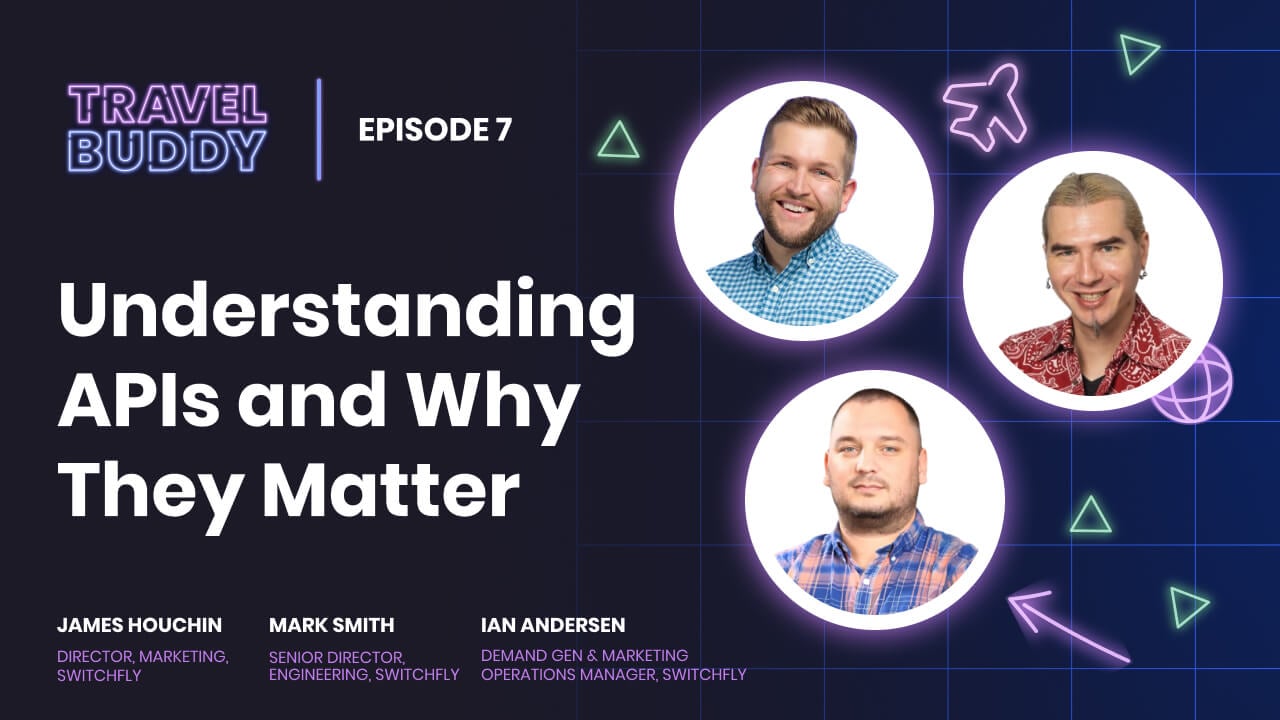
In this episode of the Travel Buddy podcast, hosted by Switc...
In episode five of the Travel Buddy podcast, James and Ian d...
.svg)
.svg)