


















Listen on your favorite app


.svg)
.svg)
.svg)

Introduction
In this episode of Travel Buddy, Switchfly's CEO, Nowell Outlaw is joined by loyalty industry leader Mark Johnson of Loyalty360 to unpack the latest trends and challenges shaping customer loyalty programs for 2025 and beyond. Together, they examine surprising data on travel resilience, the growing demand for value, and the nuanced role of personalization and AI in building lasting brand relationships. Gain fresh perspectives on balancing technology, customer trust, and simplicity in program design, as well as practical advice for loyalty leaders looking to evolve their strategies. Tune in for actionable insights and firsthand research that will help you elevate your loyalty initiatives in the year ahead.
Transcript
Brandon Giella (00:01.39)
Hello and welcome back to another episode of Travel Buddy presented by Switchfly. Today we have a lovely guest in addition to the inimitable Nowell Outlaw. Nowell, thank you for being here again. We have Mark Johnson of Loyalty360 and he's going to be talking today about some trends and themes, data, research.
things that he and his team have been thinking about for 2025 and what's maybe surprised them or what has maybe doubled down on this year, but also thinking about 2026. That's where we'll be spending the bulk of our time today. So we'll be talking about loyalty trends for 2026 for leaders that are thinking about travel, wanting to implement travel or enhance their programs for the next year. So, Mark, I will turn it over to you first. I would love to hear
Based on some of the trends that you're seeing or maybe shifts in different industries, data points that have been challenging maybe your own narratives or narratives that are in the market, what have you seen this year that has been surprising to you or interesting to you regarding themes, trends, maybe myths in the market for 2025? Based on your research, what have you guys been thinking about?
Mark Johnson (01:18.834)
There's a couple of different things, a few different things, kind of overarching themes we've seen throughout 2025. The first one is value. There's a big push right now for value within customer loyalty, holistically. And that takes a couple of form factors. Value in the program internally, value of the customer to the program, and then value of the program to the brand. So that's a big push. you know, that some brands are...
looking at redoing their program, enhancing their program. We do a state of customer loyalty research paper every year and inevitably, we've done it three years in a row, it'll four years this year. New reward options, travel being one of them, is usually number one. This year, it slid into number four, but I think that is a reflection of, you know, that there's a big push for optimization right now.
Brands are looking and they're trying to solve this value equation. Economic headwinds, certain people may not be spending more. And I think there's a big, I won't say conundrum, but everyone's saying that people aren't spending. There's malaise right now in the economy. I know we talked a little bit as we prepped for this, that travel and other industries remain strong. are challenged, but I think the economy may be stronger than it.
it actually is being perceived, especially what we hear from the brands. We get to talk to a hundred different brands, you know, every other month we talk to kind of our brand members, what they're seeing, what they're doing. And they do want to optimize their program. They're trying to provide value for their customers, but they're also trying to differentiate their offering and make sure it's resonant with the customers and can add that incremental behavioral push that they're looking
And I think those are kind of the bigger trends I think we're seeing.
Brandon Giella (03:13.302)
Okay, great. I want to talk next about how can loyalty leaders do that, basically implement those trends for 2026 or be thinking about them. So we'll get there in a second. But Nowell, before we started recording, you were talking about maybe some of the myths or the stories or the narratives that have been in 2025 and how you're seeing in hard data that that may not be the case. Can you talk a little bit about that?
Nowell (03:36.058)
Sure. There's always this narrative about, you know, travel slipping whenever there's economic instability and things like that with, you know, that travel, leisure travel specifically, will take a hit. Right. And we haven't seen that at all. Right. And it's even if I go back a year ago, people were worried about, you know, growth. Are you going to be able to achieve these numbers? You know, what are you seeing? And, you know, we have programs that are growing.
10, 20 % month over month, right? Increasing bookings. We had one customer in November do over 300 % growth, right? From running specials and doing these different things. you know, across the board, especially right now, when you think it's December 2nd programs are on the slowdown because of holidays and whatever, we are not seeing that we're seeing them grow on a, on it doesn't matter what it is.
what region of the world, they're all growing, which is good.
Brandon Giella (04:39.618)
Okay, that's good to know. It's good to know because sometimes you see these headlines and you're just like, man, is everybody just, it's just not good. But to see hard data, how people are actually voting with their own dollars, like how's that going? Yeah, that's cool.
Nowell (04:46.424)
Yeah. No, and I don't.
Correct. I do think in the loyalty sphere, right? Because really all these programs are loyalty programs. You see people spinning their points first versus using their credit card, right? So specifically from a travel value perspective, what we see is more points being redeemed and less credit card spent. So we have the ability to top up. so people could spend.
Mark Johnson (05:05.425)
100%.
Nowell (05:19.172)
People could say, you know, I'm booking a hotel in Las Vegas. could take 20 % of my points and 80 % of my credit card, or I could take, you know, 80 % of my points and 20 % of my credit card. They've definitely switched to burning more, points, right?
Brandon Giella (05:33.752)
What does that tell you? What kind of anecdotally or maybe just some thoughts that you might have, what does that communicate to you?
Mark Johnson (05:34.628)
Nowell (05:41.132)
Mark, if you want to chime in or.
Mark Johnson (05:42.898)
I think that really backs up what we're seeing. It's that value equation and how can you help that customer, right? So being able to use those points, that value they have in the program immediately, even if it's 10, 15, 20, 30 dollars to get that next trip, that shows that the brand is resonant with the customer. They understand what they're being asked.
And it of, it activates that customer in very unique way, because not all brands are doing that, but being able to kind of use that, currency they have within the brand for that experience or reward or that travel or whatever it may be that they're doing is, is very important because not all brands are doing that, but it's that responsiveness. I think that brands need to be focused on and it's a good thing.
Nowell (06:32.536)
Yeah, I mean, I will tell you, I probably can't say who the customer is, but we did have a customer program, that for, there might be a soccer event happening next year. They sold, I think, I think it's $4 million worth of those tickets in an hour using all points. Right. So, so, you know, like there is definitely value when you're like struggling to like, Hey, how can I get a ticket to this game or to this thing?
Brandon Giella (06:50.038)
Wow. Wow.
Nowell (07:01.21)
and being able to use your points on that because I'm telling you, some of those sporting events are crazy expensive and people really want to use it. I think in travel specifically, I have this conversation with my neighbor all the time because he's a road warrior. I'm like, the joke from a long time ago about when I had my airplane businesses, because you get people that come up and say, well, do you want to go fly? That's kind of coming up and asking a postman if he wants to go for a walk.
Brandon Giella (07:30.446)
You
Nowell (07:30.682)
Same thing if you're traveling, you're a salesperson, whatever, you travel a lot. Kind of the last thing you want to do is go get on an airplane to take another trip, right? Using your points. And so, you know, being able to redeem for other things is also equally important, I think in the travel ecosystem specifically that people service.
Mark Johnson (07:52.435)
100%. And I think one of the things that we've seen, not to mention names, but there's been some, you know, Delta got hammered last year for making it more difficult. There's been some hotel programs, right, that have devalued the program to make numbers. Obviously, that's a short term focus, but that has some very kind of deleterious impacts from an emotional engagement long term. So you make it more difficult to use points. Well, that's not good, especially in this time of
of need and it's across all demographics, right? Being there for that customer, whether they're, you know, multimillionaire or someone who's, who's maybe struggling to get by. It's that, that, that resonant that that customer hears me. saw a study yesterday. It came across, um, uh, about, uh, 69 % of customers over the last year have had a, what they call, uh, kind of a rage bathing type experience with a customer, with the, with a brand, which to me is
I'm not sure how to define that, that's the significance and brands don't listen. But now they're starting to, right? mean, a couple of the hotel loyalty programs that really devalued the program, right? 20,000 points a night. Traditionally now it's 50, 60. Like, come on, that doesn't say you've got me, right? That says that we really don't value and there's not that empathy.
Brandon Giella (09:08.974)
Yeah.
Yeah, I have this good friend who is a successful entrepreneur, traveled globally all the time for his work, and he was trying to be a very loyal customer of a major airline. And after his experience over 30 years, he felt like they kept moving the goal posts on that premium membership. And he felt like, well, if that was the case, I wish I could go back and have a kind
not been so loyal was his point because he felt like they just didn't care about him because they kept moving the goal posts out and he never achieved that status that he was actually looking for despite traveling all the time. So I know it can really make an impact if they feel like the goal posts are moving like that and you keep devaluing it and that's really tough. I'm curious, so Mark, you've talked about, and this question is for both of you, but I'll start with Mark. So you've talked about value.
Mark Johnson (09:55.186)
100%.
Brandon Giella (10:04.748)
being the main driver. How do you create value? What is value for your particular segments within your customer base? And so I'm curious, how do you hope that brands would live that out or implement that in 2026? And what do you see maybe that brands are doing wrong or getting wrong? And if they could focus in this direction, they would actually be a lot better off. Maybe like,
thematically, but then very tactically, what are some things that you would recommend?
Mark Johnson (10:37.616)
Well, a couple of things. So as I mentioned, the study that we do every year from a brand perspective is personalization, enhanced personalization is kind of the number one area of focus this year. And that's kind of a quandary, right? Because what personalization means to the brand may be different than what it may mean to the customer. And being able to action on that is a big challenge. Like cheers, right? Everyone knew Norm's name, he walked in. Norm, wow, we know Norm, right?
But, that's what the promise of all these new technologies, all the data that these brands have at their fingertips, but being able to action on that is very difficult. And getting back to that, being able to be resonant with the customer, understanding what they want. Brands sometimes get to be a little tone deaf. They don't necessarily hear what the customers want, right? Especially in times of economic need, we're not going to be there for the customer. And I think that that's a big challenge. if you're, it's.
truly listening to and understanding what the customers are asking of you and being able to action on that. That's kind of the basis of personalization. But brands also struggle with technology, right? Oftentimes the Martech stack is expansive, it's growing. The technology says we can do this, this and this and it may not be able to do that. So that creates some cacophony as well, right? That creates some dissonance where brands have to negotiate through.
But it's this whole idea of simplification and optimization. Our our advisory boards see that. Those are kind of the two big pieces is simplifying the programs, simplifying the approach and optimizing it as well.
Brandon Giella (12:20.622)
Okay, I want to come back to that, but Nowell, I want to hear more of what you might be thinking as well, like as you're thinking about seeing in the data, thinking about 2026, advising leaders, what do you say?
Nowell (12:30.276)
Think like Netflix. It's that easy, right? It really is because, okay, there's some population of the planet that doesn't use Netflix, but it tends to work generally because I can tell this story and everybody gets it, right? Which is, you know, if you're an action adventure guy or gal, I guess, and you you get suggested movies to watch and things like that. You know, my wife is a rom-com person. She opens her Netflix. She gets rom-com stuff, right?
to all of sudden to put horror movies in the middle of her rom-com stack makes no sense whatsoever, right? Like it just doesn't make any sense. And I think it's true for loyalty with consumers, which is, you know, if it's a rom-com person, let's put the rom-com stuff in front of them. Let's not put the horror movie. It's really just that simple. And if you think a little bit the way Netflix or, you know, Amazon and all these other guys do that, it's suggested based upon
the learnings of what you've watched, what you've clicked on, what you've done, this other stuff. And, you know, I think loyalty programs need to really pay attention to that, right? Because that's what effectively Mark is saying, which is, you know, use the data in a smart way to basically offer things that benefit the consumer, ideally at their time of purchase, right? Or at their time of need, but also with the right thing, right? That's the most important.
Brandon Giella (13:55.991)
And I think an important part of that too is you don't want to suggest only the things that they like. There's got to be a little discovery in there as well. Like, hey, you might not like this movie or you might not, your data would suggest maybe this is a little bit outside the category, but you might still really like that too, know, that kind of idea. Yeah.
Mark Johnson (13:56.183)
Absolutely.
Nowell (14:03.78)
For sure, for sure.
Nowell (14:12.846)
Yep. Correct.
Mark Johnson (14:17.231)
Well, that gets to another issue of loyalty programs. There's a big push right now, gamification, zero-party data, understanding interests, trying to understand the emotional triggers. But if you get those wrong, that can push people away, right? And I think that that next best action, that some kind of that ancillary product is very important to get right. But many brands don't do that well, right? To your point, you suggest a horror film when
Brandon Giella (14:17.452)
What?
Mark Johnson (14:45.583)
The only thing I liked it is comedies, right? Or maybe a good drama once in a while. I think brands trying to understand the customers, they have too much data and being able to simplify it. Even when you talk with a consultant, right? A brand brings in a large consultant, a Deloitte and et cetera, not to debase them, but you know, we need all this data. have this big process. You know, you don't need all that data. Again, this simplicity, six, seven data points and action on it. And if you can't action on it.
Tell them thank you and we're not going to be to do that. we appreciate that input. And that I think that's brands ask so much from customers more data. What are your interests? What are your passion points? They don't action on it. Don't do anything. Michael, what the heck that you want that data for? They're not going to do anything that can impact me or enhance my experience.
Brandon Giella (15:36.399)
Yep. Yeah. And big data and personalization and segmentation has been a big trend for a long time. But do you see that AI is maybe changing the game on that? I mean, I feel like every episode, every podcast in 2025 has to talk about AI at some point. But just real briefly, like how are you guys seeing that technology being adopted or utilized in some way that is interesting to you because you need to drive value, which requires personalization?
using data, like how is that changing the mix right now?
Mark Johnson (16:09.659)
I think there's a couple of things with AI early this year. It was one of the top 10 kind of qualitative areas of interest for brands when we met with on the brand side earlier at the conference. but, but many brands were doing it in a very unique way. did an AI study last year where brands were looking to hire teams to manage the AI, right? Cause they're very concerned with kind of the, the quote, the haze or kind of AI going rogue, similar to, I'm sure you're all familiar with the target story where target did a personalized.
communication a number of years back and they ended up sending this one guy, a gentleman, offer a discount for baby diapers or for baby clothing. And he's like, well, I don't need this. I'm 50 years old. My daughter's 20. He's like, well, the daughter was buying things in the store that the model said this person is pregnant. He's like, ah, there's no way he calls Targon is reams them. Right. I know people talk about this true story and
girl is actually pregnant, right? So, but many people are just concerned and they're like, well, wow, that data was actually right. But with AI, it's similar to autonomous vehicles, right? And kind of the pushback. There's a lot of fear around that. People being disintermediated, how to use it. So brands were hiring teams, you we're going to do this hyper segmentation communication. going to use text and proximity and email.
Nowell (17:09.987)
Oof.
Nowell (17:15.418)
Mm-hmm.
Mark Johnson (17:34.61)
But we're checking everything. So that doesn't work. I think there's a big concern on who has my data. If I'm putting it into co-pilot, you so now we can move from the large language models to a small language models. We can bring it in house and we can run it. And you know, it's okay to mess up, right? But you know, I liken it to, least earlier to the whole, the autonomous vehicles, right? There's what been six or seven people die total. It's a very small number. There's 12 to 13,000 accidents in the U.S. a day. And people are concerned about
you know, is safer, but it's that uncertainty, right? but yeah, they're definitely starting to warm to it. But their brands had to come up with their like organizational approaches, right? Kind of an agreed upon data map, but also how are we going to use it? Their approach to using AI, and think many brands starting to do that, and it's definitely starting to warm up.
Nowell (18:03.994)
6.
Brandon Giella (18:05.166)
Yeah.
Brandon Giella (18:28.814)
Thanks.
Nowell (18:29.752)
Yeah. I, you know, it's interesting. So last week, week before I was at a concert, thousand people in Denver, mostly younger people. And the lead singer, stood up on stage and was basically, you know, expletive cause we'll keep this PG AI and the whole room cheered. And I was sitting there. I was like, Whoa, that like, I haven't had that. Right. Because what I, know, you read.
Brandon Giella (18:51.148)
Interesting.
Nowell (18:59.694)
The news and you see this stuff and you're like, the market and it's all related to stuff. But there, was the first time that I realized there, there might be some blowback happening and maybe it's a younger generation with the job loss and blah, blah, blah, blah, blah, and all this stuff. But no. Well, AI can, can change the world in a lot of ways, right? There's also a negative implication of doing that. Right. And I, and I do think that.
Brandon Giella (19:09.518)
Yeah.
Yeah, yeah.
Nowell (19:26.254)
when you think about loyalty brands, you know, that example about sending the wrong thing, that's a real risk, right? It means like, hey, you actually don't know who I am. And I think that, I think that where the tech ends up is that everyone as an individual consumer, it's already done now. Like they know so much about you, right? Why does, why does the nest thermostat really exist and why was it valued at over a billion dollars? Because Google knows now,
when you're home and when you're not home, right? Just by the adjustment of a knob, right? So they can target you based upon those types of things, right? I mean, it's super weird when you start taking all these things in, but when you start thinking about, how does that infect large language models? And the large language model is going to drive personalization, but I think there's a line where if you share that you have too much data on someone,
it's going to spook them. It's definitely going to spook them. And I think that that is where, you know, it depends on the generation where people are like, Hey, I, I do not want you to have my data. Right. I think the other side is that's potentially coming because they're, they're vacuuming up data by the gigabit per second. And it's something to be aware of. So
Brandon Giella (20:25.976)
Yeah, yeah.
Brandon Giella (20:48.142)
Yeah, yeah, it's definitely in the background of these kind of conversations like everybody wants personalized Content but they don't want it to personalize but I'm seeing a lot of pushback in the the AI conversations in the creative industry obviously because People want that the kind of like human this when they're creating but also when they're receiving and I think that's it's that's very fuzzy It's a very broad concept, but but there's something to that of that. I think
Mark Johnson (21:05.615)
Yes.
Nowell (21:16.964)
I mean, I met a guy in Lisbon who was in part of the lawsuit, I think against one of them, because like his wife's book or something was basically being used and all this stuff. And I think that, you know, the, there's a whole economy of what's happening, right? If you type into one of these engines and say, give me the best recipe for ABC. And that recipe has come from a top chef. Then he put it on his website.
Brandon Giella (21:17.452)
leaders can pay attention to.
Brandon Giella (21:28.76)
Wow.
Nowell (21:47.47)
Has it been stolen? You know what mean? Like there's all this stuff. He used to use it to sell his book, but now he doesn't get the book back. So anyway, we're way off topic, but you know, I think it's, I think it's, I think long-term and even short-term people just have to use it in the right way. You know, yes, it can automate the live in daylights out of your content so that everyone sounds like a pro and does all this stuff. And you can send out, know, instead of sending five emails a week, you can now send 50 emails a week.
Brandon Giella (21:49.518)
Yep.
Brandon Giella (21:54.688)
Yeah.
Brandon Giella (22:11.661)
Yeah.
Nowell (22:16.408)
But you got to think about the consumer and go, I don't want 50 emails a week from you. Like that's overkill, right? Like let's not go there.
Brandon Giella (22:20.684)
Yep. Yeah. Yeah, agreed. And to connect the dots a little bit. So Mark, led with, if you want to be successful in your loyalty program, it needs to provide value to the customer, to the employee. All of these things are very, very important. That's always been the case. mean, that's always the case of any business you interact with or anything that you buy or purchase, you need it to be valuable. The way to do that is that it needs to be personalized. But to do that well, you have to have a lot of data.
Mark Johnson (22:35.451)
correct.
Brandon Giella (22:50.796)
which AI is a perfect fit for doing that. But if you don't get it right, you can break that trust that you have with the employee. And so there's all these kind of big narratives that are kind of coalescing in getting this right. So I can hear listeners thinking, that's overwhelming to me. There's so much technology, there's so much data, there's so much, you know,
customer stories and narratives that are happening politically, economically, socially. I'm overwhelmed. I don't know what to do in 2026. Where do I get started? What is some practical or concrete examples or steps that a leader could take to think about, okay, I want to improve my program early next year. Where do I even begin? Where do I start?
Mark Johnson (23:42.258)
When brands look at where their program is, I think there's a dichotomy between a customer loyalty program and a customer loyalty focus. So people who have a customer loyalty program, they may have two or three junior people, they may be working with an agency to help them create their, do their creative and work on their strategy. But organizations have a customer loyalty focus and you're seeing more of that chief customer officer.
the side to side of the chief marketing officer or can be kind of completely different one or a chief customer experience officer. There's a disc kind of a dichotomy and the brands that are focused on true customer loyalty and they're not just focused on the programmatic. We're giving you points, we're giving you whatever. There's that reciprocity between that. But brands have a hard time looking at it honestly and saying, is not a reciprocal program, right? I'm looking to this to drive as much transactional volume as I can. And sometimes the customers, if they're getting back the value, I'm asking the brand for value, you're telling me to buy more things. Well, that may not be what I want to do right now. And if you push that, that's where you can alienate the customer. I think it's being able to truly listen to and understand the customers, making sure the brand, the program is simple and it is resonant with the customers, even from a travel and partnership perspective.
Nowell (25:01.914)
you
Mark Johnson (25:03.589)
Brands are optimizing that. Maybe our partnerships don't work, right? Maybe it's not good for all of our clients. So maybe we need to call three or four of these and pick out the two or three or four that are providing the most impact for that customer. simple. They understand what the program is. so I think that's, you know, it's, it's simplifying, making sure that it's resonant and also, you know, and making sure that again, it's providing the value, but also that it's at that agency conflict we all learned about in business school, right?
what may be good for the CEO comes in and chainsaw Dunlap, remember Al Dunlap back in the day. Well, it was great for him because he made all his bonuses, but for the 30 % of Sunbeam or whoever it was at the time that he ended up cutting, maybe not as good. So I think that it's making sure that there's equal value within anything that you've designed, which can be challenged because you have to have that metacognition saying, well,
Nowell (25:37.274)
you
Mark Johnson (25:58.681)
Maybe it's really not providing that value. And it's hard for people to step outside of what they see to see it from the customer impact perspective.
Brandon Giella (26:06.786)
Okay, so maybe if I could summarize kind of where you're going is maybe the theme is get back to basics. What is the real value that you're driving for the customer and is that the thing that's prioritized in our organization? know, are we actually, do we have a C-suite officer who's over this program or are they in the focus? I like how you distinguish those two things. And then can we simplify it and make sure that that's the thing that we're actually focused on this year? Is that a fair summary?
Mark Johnson (26:36.761)
I think so. And getting back to that example of norm, technology was supposed to enable that, right? Everyone knows. So if Sam knew norm very well, right? He's not gonna see your beer is 50 % more expensive or you have to do these five things in order to come into the bar next time. brands are necessarily doing that, right? But it's technology. makes it a little cold sometimes. So they can just start looking at that as numbers versus a person. And obviously if you have millions of people in program, you can't look at them individually as a person, but.
You know, having that quote unquote empathy to a certain degree for the customers is hard because, they have to those metrics. But again, would you do that to someone you saw in person?
Brandon Giella (27:17.23)
Yeah, which is the fear around AI. I want to be a human. I want to be empathized with. But it's hard to do. It's hard to do. Nowell, what do say?
Nowell (27:26.417)
Yeah. I think that personalization will get there. I was just thinking that six, seven years ago, I helped build a program for life insurance, completely different outside of this, but this is seven years ago. And it gave you a predictive score based upon your ability to be underwritten for life insurance without a blood test. Right. Pretty simple. Used about, I think, 26 data points.
Brandon Giella (27:51.406)
interesting.
Nowell (27:55.374)
that's out there in the market to basically build a model for whether or not you as a human being are underwritable. And you think about the risk that, that insurance companies take on to whether or not I should float you, you know, do you own a house, cars, like all those things. And I think that, you know, that will get to that point eventually in these loyalty programs, right? Where I can look at you as a person and I can know all this other data about you.
Brandon Giella (28:07.534)
Mm.
Nowell (28:23.672)
And a lot of that stuff is not really pulled into these programs yet. And once you understand that, you can have a really comprehensive view about that consumer. And now you can really start targeting things directly for what they want, need, you know, and their, their desires are right. And it's not there yet. And I think, you know, less is more for sure and crawl, walk, run. But I think over the next five years, you're going to start to see that stuff shift that way, right? Where.
Mark Johnson (28:36.24)
Thank
Nowell (28:53.434)
You know, they, you'll have so much data and so much information and so much, you know, speed of, you know, Hey, this person is shopping. They're doing this for a trip, you know, maybe, or, or what, what we're also seeing is, Hey, you know, Brandon's on a trip right now. Right. He's in Cancun. Let me send him an offer for, you know, swim with the dolphins bang, right. When he's on a strip like that kind of stuff is starting to happen. Right.
Brandon Giella (29:21.678)
I would love that actually, know, like in part, can I get an offer that is that specific? That would be amazing. What would you say, what would be like a practical next step of somebody who's like, okay, I want to go down that road. I want to be more highly personalized in a very trustworthy, very honorable way. I want to use AI the right way. What would you say to them about how they could maybe get started on that journey next year if they're not already?
Mark Johnson (29:37.68)
you
Mark Johnson (29:50.369)
I think it's a couple of things. Understanding kind of where you are and having an honest benchmark of where you are. Doing some focus groups, of a diverse set of focus groups, right? From your different demographics. You have that segment within the program, you have that segment from an acquisition perspective. And then, you know, if you have opportunities to kind of listen, right? To listen to the bad scenarios, right? And that's what we hear from brands that, you know, the CMO is on four or five, six calls a week, right? They go to the call center and hear them bitching, hear them complaining about a service little foible they've had. And that's like, wow, I never saw this, right? Because oftentimes in the quote unquote ivory towers, they may not be hearing and seeing that that frontline interaction. And then you can see how, how is customer service enabled to do certain things? What is the, know, how do you make decisions? So someone buys from me once a month, maybe we do something a little more than someone buys from me every other year, but just
understanding where those service level opportunities are and how you get that buy in, that organizational buy in. It's interesting, we talked earlier about Netflix, I just finished his autobiography on Reed Hastings. Very interesting book on how he did things, how he hired people, how he empowered people. So obviously they're the ultimate example of a customer experience organization. I they hired people where they were looking to, we need to build this whole system.
And the people that have 25 people you sign up on, no, you decide it. Do you think it's the right thing to do? And she's like, holy cow, I can sign up on a $25 million project right now. like, yeah, absolutely. If you think it's the right thing to do, do it. Right? But obviously those cultures are rare. But I think it's having that aligned organization is a big piece of that.
Nowell (31:39.876)
Yeah. If you, if you ever read the book, I don't remember his name, the founder of Zappos, the shoes, and you, and you read his book about how he empowered his call center staff, right? To do the right thing at all times. I mean, that's a, that's a cultural shift from the norm, right? And, and as an example, I think it was like midnight or something, and he called his call center and he had them order him a pizza and have it delivered. This is to the shoe customer service and they did it. They didn't know it was him. They did it.
Mark Johnson (31:44.801)
Yeah.
Brandon Giella (31:45.176)
Yeah.
Brandon Giella (31:56.716)
Yeah.
Nowell (32:09.434)
Right. Because they're there to take care of the customer and, and, know, absolutely crazy. But, but I think with, with all of this, comes to also back to who is your customer. Cause different brands service different needs and different segments of the market. Right. So if you're an air carrier or a hotel or a, you know, food redemption thing, or, know, whatever it is, you know, that also comes into play. Like is, you know, am I getting rewards that make sense based upon the brand?
Brandon Giella (32:33.442)
Hmm.
Nowell (32:38.404)
that I'm also affiliated with.
Brandon Giella (32:40.302)
And a big part of that would be empowerment. You have to empower the people that are actually listening to the customer to be able to make those kind of decisions. And that's not always an easy thing, but very important. Okay, any final takeaways? Anything that you guys want to make sure that loyalty leaders listening are keeping in mind for the next, say, six to 12 months?
Mark Johnson (32:40.805)
Yeah.
Nowell (32:48.836)
for sure.
Mark Johnson (33:03.376)
I think the community that obviously Nowell and his team are part of, it's growing. think there was a great deal of reticence for a period of time to talk about what's working for my brand or even technologies sharing, How do we work together? But it's definitely changing. Brands are willing to talk about what the opportunities are, what they're seeing, what they're hearing. They want solutions, a good percentage of them. And I think that
Obviously there's a great deal of technologies that are doing some really cool things out there. But I think there's an openness to trying to change things, trying to get things right. And it's share. think that's what we're seeing a lot more of.
Nowell (33:48.42)
think I'm good.
Brandon Giella (33:51.374)
Well, as always, Mark and his team have amazing research. So please go to loyalty360.org and you can see a lot of the ways that they're thinking, their insights and their data. If you're thinking about either starting or improving your program for 2026. And of course, the Switchfly team always has great resources available as well at their website at switchfly.com. Thank you for listening. Thank you, Nowell. Thank you, Mark, for joining and we will see you next time.
Mark Johnson (34:20.155)
Thank you very much.
Podcast Episodes
Popular
The "Travel Buddy" podcast's inaugural episode, presented by...
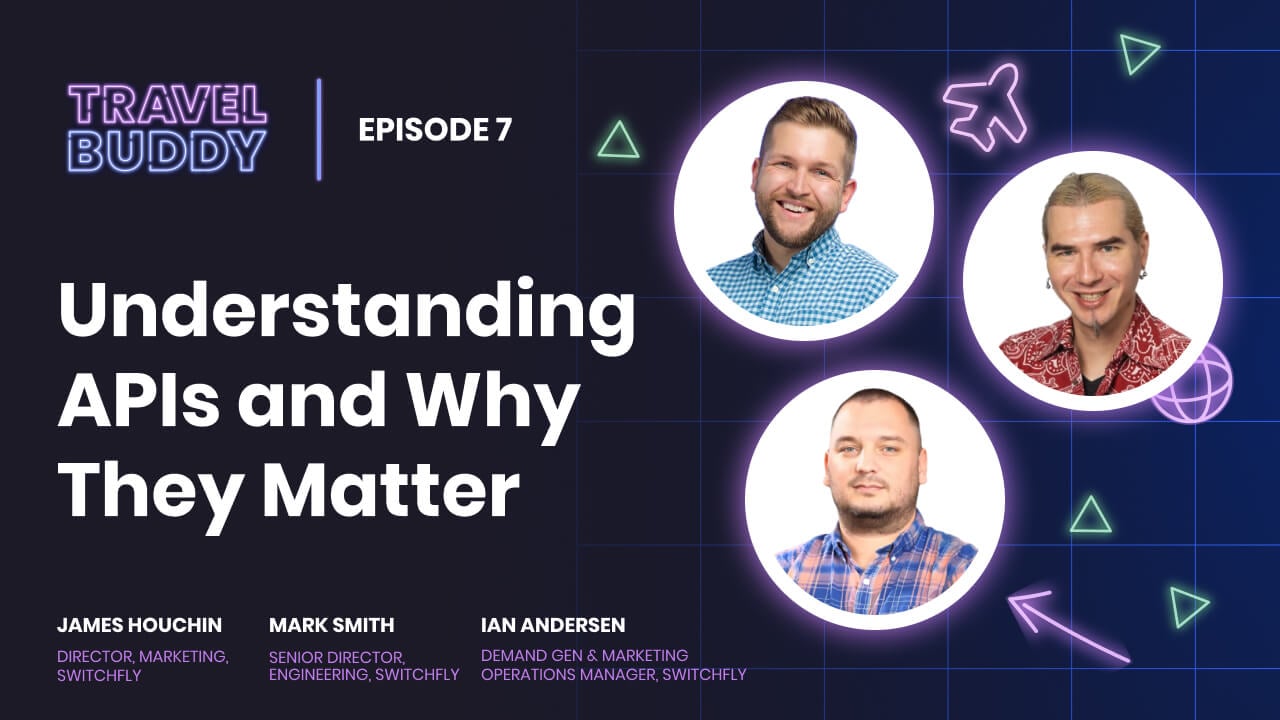
In this episode of the Travel Buddy podcast, hosted by Switc...
In episode five of the Travel Buddy podcast, James and Ian d...
.svg)
.svg)