




















Listen on your favorite app


.svg)
.svg)
.svg)

Introduction
In this episode, John Hanson and Alex Johnson explore why building trust is the foundation of successful business relationships and revenue growth. Together, they discuss the real difference between being a vendor and a partner, and share candid stories about walking away from deals that aren't the right fit. With practical insights on confidence, transparency, and the power of flexibility, this conversation is packed with takeaways for anyone looking to foster authentic, long-term business partnerships. Tune in to discover how establishing trust from the very first interaction can drive stronger outcomes for you and your clients.
Transcript
Brandon Giella (00:01.316)
Today we are talking about earning trust before earning revenue. And we have two special guests today, John Hanson and Alex Johnson. Thank you so much for joining. Welcome to the show. Alex, I wanna start with you. We are talking in this portion, this segment about how sometimes,
relationships and human beings on the other end of our calls is the main way that we actually establish trust because human beings buy from other human beings. And you have this great story about talking about jerks. Tell me about jerks.
Alex Johnson (00:44.38)
Yeah, I think what's fun for us as salespeople is there, you're of a certain generation, you remember, you know, death of a salesman and salespeople have this really bad rap. think younger people might think of it as like a used car salesman or something along those lines or grifters trying to sell you junk online. But what actually, you know, good salespeople
know what their product is and the problems they solve and they try to find the businesses that they can help solve those problems for. And a lot of times you can still come across those salespeople that can just be jerks. mean, we've heard it, you know, at Switchfly since we've been here two years, we've heard over five times that there are, you know, experiences where they've
have just jerk of a salesperson and like they want the technology they need it for their company but they don't like working with the person that they're talking to and I think that not switch fly jerks right yeah into other other industry folks and and I think that as we talk about you trust
Brandon Giella (01:39.436)
Not Switchfly jerks. They're not on Switchfly. Yeah, yeah, Yeah, yeah.
Alex Johnson (01:50.342)
that makes it really difficult as you hand it off to another team that they want to work with in the long term, because you're just starting off on a bad foot. And I think it's really important that, as we talk about trust, that those first reactions, the first interactions are really positive and you want to show that you care and that they're important to you, whether they're a large or small enterprise.
Brandon Giella (02:12.952)
Right. Yeah, it's a strict no-jokes policy. But the point is establishing a good relationship upfront actually leads to more revenue later on if you can establish that trust and there's ways of doing that and not doing that. We'll talk about those things. So a question I'll turn over to John now. When you think about the difference between a partner and a vendor,
What are some of the signals that you think of that says this is a partner that's in it with me that I want to work with rather than just a vendor? What communicates that to you?
John Hanson (02:54.546)
Vendors, when I think of vendors, it's often quick transactions, right? Here's the keys, good luck. Partnerships all about establishing trust, establishing yourself as that industry expert and really lead them on that journey of what's their current solution and where are they trying to go and how can we potentially help them.
get there. Again, vendors, I think more of here you go, here is access, good luck with it. Partnerships and really how you establish yourself as partner is understanding where they're at, where they're trying to go, and how do we lead them there and what steps are we going to take? And of course, once the deal is closed, what does the continued partnership look like? How do we set these mutual goals and define what success looks like for partnership? And it's a collaborative effort between both parties to really define what this mutual
success would look like.
Brandon Giella (03:46.263)
Alex, anything to add on to that?
Alex Johnson (03:49.223)
Yeah, I think he explained it quite well. And it really is about, know, a vendor, as he said, is a quick sign off of partnership. You never really are.
you never really stop communicating. It is a continuous cycle and you know, for the length of the contract and ideally renewals on onward. So yeah, you're, you're going to continue building the relationship as you go. And so partnerships, as you start off, you know, it's going to be more labor intensive, more meetings and a lot more.
on personalities and getting to know the other people and how they work and their communication style versus, hey, here's a contract. We solve your problem, sign, good luck, right? There's going to be some ongoing feedback, you know, that ongoing feedback loop.
John Hanson (04:39.308)
Yeah, and when I really think of partnerships, it's a lot of those mutual goals. How do we work towards success and define what success looks like for both parties?
Brandon Giella (04:48.676)
Okay, I wanna talk about...
There's this balance that I think every salesperson has, especially when you're trying to think of yourself as a partner and building a relationship, building the trust. And this is a balance between like, we are talking because there is a business relationship here. We are going to exchange money. This at root is a commercial transaction. And yet I care about you as a human being and I care about your business and I want to see your success.
But how do you strike that balance when you're talking or going through the sales process, trying to establish trust and relational care, but also this is a commercial activity at root. How do you think about that kind of thing?
John Hanson (05:39.416)
So when I think about that, it's really just establishing yourself as the industry partner, not necessarily pushing them to the sale, but providing statistics of what have we seen across the industry? What have we seen from our other partners? Just show those success stories without necessarily pushing them to, hey, we got to sign this deal. We got to close this deal, but rather lead them to that conclusion themselves by being somebody they like, being somebody that they can trust, and showing how we've done this at scale.
Alex Johnson (06:09.094)
And I think adding to that.
it's not always even just customer examples. can be examples of deals you've had to turn down or people you've had to, think establishing trust is huge. You would say, okay, like we, don't think we're the right solution for you. Or when you are reaching out to me, like, hey, we don't know. Like that's why we're, you know, we have a lot of questions for you. We want to make sure we find the value and we, you know, a big thing that you can do as a salesperson starting off. And what we like to do at Switchfy is like, we will tell you if we're not the right fit. Like this isn't, you know,
you can kind of talk through what the future looks like, know, helping paint a picture saying.
If this doesn't work out for either of us, there's mutual benefit here. We both generate revenue from travel bookings. We both want to scale together and grow together. Switchfly is not a company that has hundreds of clients. We are more focused on very strategic partners that we can grow long-term with. And so we can say, if this isn't the right fit, then this causes problems with our...
client support team and our technical team. spending all this time building this thing for something that maybe for a market or an organization that it's just not a really good fit for. So using examples of times where we've had a lot of small travel agencies reach out to us and they're like, hey, we're looking for more of a do-it-yourself solution. And we're like, that's not really what we do.
Alex Johnson (07:37.651)
like SwitchVise, more we integrate into points programs, we, you know, a packaging travel products, but we're, we're not for the mom and pop travel agency. And so we don't want to make them go through that ringer or charge them an exorbitant amount of money, like to them, you know, these small organizations that really doesn't help them or won't let them grow. And by using examples like that, that helps a company that we know we can likely work with that helps build trust. Cause we say like, Hey, we're not in the volume game here.
We are for a strategic partner and we think that you could be that.
Brandon Giella (08:11.883)
Okay, following that thread, how does confidence play into establishing trust in relationships? And there's a couple of things going on here. One is,
people like people that are confident. They trust people that are confident. If you come in, you're kind of wavering, you don't know exactly what you want to say, you don't know exactly how you can help them. It's kind of like, I don't know if I want to trust this person or get in a relationship or a partnership with them. So there's that. But then there's also like to what you guys are saying is you've got to know who you're talking to and that you can actually help them and that you're a good fit. So call it your ICP, call it, you you being very focused at an
organizational level, a corporate level, knowing who you're a fit for and who you're not, but also in a maturity maybe in your career as well of knowing like, I know I have a quota, I know I've got goals, I've got to hit these goals, and yet I don't think I'm a good fit to take this call or to continue this relationship. So how do you think about confidence kind of in those two veins, like establishing trust but also knowing when to cut it off?
John Hanson (09:19.468)
I think it's all a lot has to do with transparency. Where are you currently at? Are we a good fit based on what they're saying and where their current solution is and where they're trying to go? Can we help them achieve that? I think for when you display confidence also, you want to share outcomes that we have seen from similar clients and companies rather than making promises of this is where we could go.
It all ties back to establishing yourself as the industry expert and understanding what they're really looking for in a partner and rather than trying to convince them or oversell it, we just share outcomes that we've seen from similar clients.
Alex Johnson (09:56.765)
Yeah, I transparency was a good word that John used there is,
You know, you want to be confident that, like we have a great product. We've got a great team. You know, we solve problems. this isn't a, you know, nice to have solution, but, know, so you want to come in confident with, you know, what, what, you know, you're good at. But I think when you said the balance, there's also the vulnerability piece. It's like, Hey, like, well, like there's a lot that we don't know. And that's our job is to help, you know, uncover that. And using the examples that we use earlier saying, it's like, Hey, now that we've uncovered more,
like information, we might not be the right fit right now. You know, I think we're going to talk about it here potentially sued is that a lot of times we run into roadblocks through the process and a lot of times it comes down to just the development for the development team and timelines for a company. And I think that that's probably our number one roadblock or thing that stalls a deal. And that's okay. Like that means, Hey, this company is growing. They've got things that they need to build and we want to show value.
what we do at Switchfly and as a, I think building trust is saying, hey, I understand that, like, I'm not gonna push you to close this or get started or overwhelm your team, like our team needs time as well. And really, and being vulnerable with them too, like, I mean, we've had it to where we've...
you know, had a successful quarter or something and we have two or three, four implementations and somebody's really gung ho and excited and we have to set the expectations and be like, Hey, like we're glad you're excited, but we're, we are at least a month out from being able to get like truly started on building this. And that's great for both of us because we're setting the expectation, laying the groundwork. It, adds confidence in their part. They're like, Hey, these guys are doing really well that all these people that's validating their decision to want to work with us while also we're being honest and saying, yeah,
Alex Johnson (11:48.204)
we're not going to have you ready to go tomorrow versus lying and or setting like unrealistic expectations. It's only going to cause problems for teams in the future.
Brandon Giella (11:57.347)
you
Yeah, expectations is a key component of that, that confidence and trust building too. Cause if you set realistic expectations, A, it demonstrates expertise, but B, you know, that we've done this before, but B it says like, Hey, this is just, this is what it takes. I'm trans, I'm transparent with the process and here's where we're at. and if you hit those, those expectations, those timelines, that builds a lot of trust. And it also builds trust if you say like, Hey, I'm a human, you know, like, I don't know the answer to that question. That's a great question.
Let me get back to you on that. know, and that's like, okay, he's a human being, you know. So I love that.
Okay, so I want to shift into a segment about more in the weeds of that trust building and creating value and insight for the prospect in the sales process. So what does it look like for you guys that you obviously like in order for us to be full partners and go through all the things, we need to be a client, we need to have a signature, that kind of thing. But when it comes to the sales process and marketing process,
of giving away insight and value before there is a signature. How do you think about that? Is it communication? Is it insight? Do you have materials that you send ahead of time? How does that work?
John Hanson (13:20.962)
I think it's a combination of all of that, right? You wanna be ready to strike when the iron's hot and they're ready to make a move. Switchfly, as Alex had mentioned, we need our partners to be willing to have resources available for the implementation. And oftentimes they're doing their own development and working on other projects when we start these conversations. So it's taking that prospect through the cycle.
providing them different marketing materials that is relevant to them, showing them different case studies that we have done with similar clients and the success that they have seen, and be ready to move once they are ready. And it's just, again, establishing that line of trust so when they are ready, they come to you for that.
Alex Johnson (14:06.813)
Yeah, and I would also say, know, when you think about things you can kind of give away, you know,
early on in our conversations, I with any sales organization, I've been, think, selling software for 11 years now. You always get like, Hey, what does it cost? Like, what's it cost? Or what are the benefits always like, really right off the bat? And you're like, you know, you listen to any sales, you know, consultants or hard-o person has read every sales book, they're like, Oh, you've got to lead them to this. Or are you like, make sure you never give it away until you have this, like Switchfly is built a little different. I we have a commercial structure that
is mutually beneficial like we are not successful unless our partners are and so we're able to share that pretty early on and right off the bat that helps us earn trust and it helps us get like it makes it seem like this is less of a sales pitch
Brandon Giella (14:52.279)
Yeah.
Alex Johnson (14:57.267)
And it's more of a hey we need you and you need us like we but we neither of us can be successful without each other Versus we are like you mentioned early on a vendor who we're selling you a service and you're just paying us That's how we make money is you just paying us directly and then obviously we would help you know solve a problem or Increase value somewhere else. It's like no like there are our commercials are set up to where you know, we're incentivized to make sure that
Brandon Giella (15:07.746)
Yep.
Alex Johnson (15:24.275)
as many people can book travel as possible and we both win together. And that's something we can give pretty early on in the process that I think helps us out a lot.
Brandon Giella (15:28.183)
Yeah.
John Hanson (15:31.757)
Mm-hmm.
And I think throughout the sales process, a common theme in my conversations is really from the beginning establishing this relationship. It's not a vendor relationship. It is a true partnership. There is a revenue share component to this. So in addition to just driving the additional engagement for your end programs, you can also look at this as a way to make more money for your business, which ultimately that's the whole goal about every business, right? Drive increased revenue.
So of course we want to really establish this is a partnership and being a partnership both have to give some. We need you to have these resources available and also work to set these mutual goals to define what success looks like for our partnership.
Brandon Giella (16:16.618)
Yeah, yeah, I like that. It's, you know, it's always better to have the drive revenue conversation than the reduced cost conversation. But it's always a push and pull. And this is always a debate in sales circles is, you know, do you lean into driving up the problem and the urgency and testing your price elasticity and your pricing power and pricing as much as the market can bear? And but then there's like, this is our pricing. This is how we work. This is a structure. We're in it with you. We want you to see
how we make our money so that you understand what we're all about here. We're on the same team. You win, we win. There's all these kind of different dynamics that can play in, but being a partner and being as open as you can about things I think is always the way to go to establish that kind of trust. That's really great.
Alex Johnson (17:02.259)
I think a good piece to that too is when we share customer examples, there's a thing that we do that I think is helpful and this works I think well in pretty much any sales org, no matter what the business is, is like setting the right expectations. So it's like, hey, here's a couple case studies to show we've done this.
and like, you know, this is why you should believe that this is possible. But also when we are putting together, you know, estimates or projections, right, we we basically say upfront, hey, we lowered these significantly to show that like, this is a possibility, you know, that but this is like an achievable goal.
that we think is based on what you've done. So it's not the, you know, obviously the front facing case study that we plaster everywhere to show everybody that, you know, how successful we are. We make it say, Hey, this this is like real expectations. You know, these are, are,
achievable goals. And when you basically do what you say you're going to do, I think that's a big part of it. It's where you're not leading them into unrealistic expectations. And we do that, you know, fairly early on when we speak to commercials is because we want to give them an idea of the revenue potential that there is. But we set the bar pretty low to show that even that bar that's super achievable is a huge win for both of us.
And then when you blow those goals out of the water, like we've done a few times, well now those people are, those customers are quick to wanting to build a case study, because they had this in their mind.
Alex Johnson (18:36.58)
that like they were down here and now, you know, the sky's the limit. And I think that also goes into play when we talk about relationship. John mentioned it too, and it's really good like relationship building. You know, when you build a champion within an organization and you say, hey, like we are partners, we're going to continue to work together, especially, you know, not every organization is this way, but Switchfly works this way where John and I are still, you know, very involved after we, you know, solidify an agreement. And so during the implementation,
Alex Johnson (19:36.484)
I need you in here like this is happening and we need to come up with a solution and you make yourself available well now you've kept that promise from before and now you've built you've proved that you are trustworthy because you made a promise you can keep and I think that's really important is doing what you say you will do
Brandon Giella (19:51.874)
Thank
That's such a great point. I'm reaching over here, grab this book, The Speed of Trust by Stephen Covey. This is such a great book to talk about that very thing. When you establish that trust, you have a great relationship, you are the partner, you've got a champion. And when inevitably life's vicissitudes create a problem, because this is how life goes, you have something to fall back on. You can actually move a lot more quickly because you've established that trust upfront. And it's a huge value add for the relationship.
John Hanson (20:23.072)
I think something that really sets apart a partner from a vendor is stepping outside of their, your naturally defined role into doing some of those more partnership things, whether it's running different webinars with their in programs that might not have any impact on revenue for you or your company, but you're just trying to help them grow their program. That's what a real partner is stepping out of those defined roles to really help see the success of the program grow.
Alex Johnson (20:23.187)
Absolutely.
Brandon Giella (20:50.753)
Yeah, at the end of the day, it's like, I don't really care what your title is, I just, need help. I have a problem, please help me. So yeah, as much as you can jump in and help, that's good. Okay, so I wanna switch to another segment. Alex, you kind of alluded to this earlier, that you are, as all of us are,
John Hanson (20:58.306)
Exactly.
Brandon Giella (21:13.535)
You are one solution among many in a market that has many different alternatives. Some can call that competitors, but we live in this world where you are not the only option available.
Sometimes though, a competitor doesn't look like another company that you can name. It could be like Alex, what you're talking about, maybe it's development team speed. Maybe it's a product roadmap. The client, customer prospects roadmap is actually the biggest competitor that you have. Could be delay, could be politics within the internal team. How many sales newsletters have you seen where it's like your biggest competitors
no decision, you know, it's like, okay, no decision. So talk to us a little bit about how you see working through those kinds of things from like a competitive standpoint, how you present your, you know, just kind of work through that in the trust building exercise.
Alex Johnson (22:13.981)
Yeah, I think it's about being flexible and that starts with the organization, know, executive leadership team, know, management, things like that is the ability to be flexible. I think it's always interesting with Switchfy, we've been around for 23 plus years, but as the company has grown, it's evolved and...
we've almost kept a startup mentality the last several years that have allowed us to be flexible. And I think a big part of that is when we, you mentioned a great one, like we've talked about before is when, you know,
a customer says, I love this. Like we want to get started. but we have like three new, you know, development projects going on right now. So it could be three months. It could be six months. It's okay. Well, yeah, you know, we can always sign a contract and we can do all the, the, you know, the, the paperwork stuff in advance, but
a lot of times the way maybe commercials are structured or how like the timeline of launch and really expectations both from the customer and from internal teams within an organization. Being flexible helps a lot because we can maybe switch one of our commercials from X to Y because that fits them better. It also fits us, makes it more sense for us because there's less pressure on this partner to
achieve results necessarily but we know that we can secure them as a partner and by being flexible that allows us you know that makes us look like a true partner you know versus not just even a vendor but like another competitors like nope you have until the end of this quarter or this deal goes away you no longer get those it's actually going to be increased and if you don't hit XYZ you know XYZ equal you are you know you're gonna owe us or something like that
Alex Johnson (24:15.417)
Everybody has the commercial structures. They have like their policies and you know, their preferred ways to work but being flexible Really, you know builds trust but it makes you want to be a partner It makes that you be a partner that somebody wants to work with and feels confident working with so that if in six months, you know
They have a product that just crashes or the developments that where they lost three or four people and I hey We know hey switch by we know we told you we wanted to get started by here or that we were expected to hit these numbers by this point But here's what happened. It's like yeah, those things happen. All right, we'll pivot with you and we'll make this work So I just think flexibility is key and that doesn't happen in the bureaucracies of larger companies or you know, very stubborn leadership groups
Brandon Giella (25:09.664)
Yeah, how do you know when...
when there's like a legitimate like actual problem that they like, they want it, they're in, but there's like a technical, I don't know, obstacle. And when is it just like bureaucracy and politics? And how do you kind of navigate both of those things? Because they seem like two different ways of managing that relationship.
John Hanson (25:39.83)
I'd say each, I mean, each deal is unique, right? So you have to have that flexibility, that startup mentality to be able to work with them, whether it's the bureaucracy of it's slowing down the deal. Okay, well, what can we do then? Do we need to set up a call with some of the other key stakeholders and talk through this and really understanding what is the main reason? it timelines? Is it development resources? Is it budget? And just really understanding that, but.
it all ties back to being that trusted partner. We can make the move whenever you are ready and whether if it's technical issues, okay, well, let's bring in our tech team. Let's sit down and let's go through the documentation. Let's understand where these technical hurdles are coming from and what can we do to overcome them together.
Alex Johnson (26:22.739)
I think identifying between the two, whether it's...
for bureaucracy, development, whatever. mean, there are buying signals and there are like what we run into in sales. I mean, it doesn't matter what you sell. This comes up a lot where it's like, you have the raw raw person. I love this. We totally need this. We can get started with this right away. But then that person who might be a champion or maybe not necessarily the key decision maker or one of several decision makers, he takes that back and it's like, you have to temper expectations and be like, all right, that's great.
I this comes down to being patient, but also not.
you know, getting your own expectations up until you see the real buying signals. Cause a lot of the challenges with like bureaucracy or something you can see coming early enough if you, if you can catch it quick enough. Things come out of the woodwork a lot of times like legal, you know, you can see, Hey, there, I mean, there's ways around it. We've, we've run into the past, you know, legal taking like two, three, four months. And it's like, they've got other things that they're doing as well. Well that, you know, our decision makers have been very, Hey, like we're,
ready to go like this is truly holding this up but then there are situations where like if you're working with the you know like the CEO
Alex Johnson (27:40.644)
or the main decision maker, can influence like, need you guys to actually like, they go to legal and say, need to wrap this up. But if it is dragging out, you can kind of start to understand it's the bureaucracy, like maybe they weren't a hundred percent sold or we didn't have the right person. And these are excuses from maybe your internal champion who doesn't want to just straight up say like, I actually didn't get all the buy-in like I told you. And that can happen. And so it is about being flexible, but it is kind of understanding and asking the right questions as you go through the process.
understand it's like is this really development or like were you just not really sold? I mean it happens to us all the time like and you you want to get excited as well but you have to pay attention to like what what's actually possible.
John Hanson (28:23.938)
And I think a lot of it boils back down to trust, right? Once you establish that relationship with your prospect, they trust you, they're going to naturally be more open, more transparent of what's going on. What are the actual roadblocks? And just have that better understanding for when the partnership does launch and you have that foundation already.
Brandon Giella (28:43.104)
It's a little good cop, bad cop. And you got to find out who's the bad cop. It makes me think of the story. I went to seminary and I had a professor tell me, if you're becoming a new leader at a church or something like that, you might have your organizational structure within the church or something. But there's going to be a little old lady in the back, back pew that's been there for 40 years. And she is actually the power center of this entire operation. And if you don't know her, because you're
looking at the leadership structure and she's not on it but she actually says what happens and what doesn't happen in this church anyway it makes me think like you always got to know who's a little old lady in this organization that you need to know about you know that's maybe neither here nor there but it's always been a helpful little insight for me
Alex Johnson (29:30.323)
Yeah, and I think a ways that that's funny. We have seen that before, but also I think what made me think, you know, when we talked about the bureaucracy piece of it as well as, you know, I mentioned earlier about how some, you know, sales orgs or companies, they'll like put your feet to the fire just because like, you know, they might not be the best. But sometimes it is about like putting money where your mouth is like, Hey, we, if you have built trust and you've been, you've built this champion, then you can actually say it like sometimes you have to just tell them like, you know,
I always try to think of the right analogy because I'm from the Midwest and so we say like, you know, go to the bathroom, we get off the pot in a less nice way. But it's like, hey, like we've said we're going to do this and we've accommodated you on X, Y, and Z. If you can't, you know, do what you say you're going to do, then we're out.
Brandon Giella (30:07.462)
Yeah.
Alex Johnson (30:21.424)
and being able to walk away and like truly believing that I think is is the hardest thing to do in sales. But if you're willing to walk away, I think that also shows the you know, your champion and or that org that you're trying to work with, you know, just how serious you are in that like what's important to us and then because we come across some of these things where
you know, whether it's the development or like the wishy-washy back and forth or even just their communication style might be a little more harsh. It's like, do I want my team to have to work with this going forward? And I think that matters just as much as closing a deal. It's like...
are these people going to be a nightmare to work for? Like they don't want us to be a nightmare to work with. Why would we want to manage that? I think it's really important. So when you're dealing with those different things, it's identifying is this actually the real problem of why we can't move forward and kind of highlighting like, hey, like we might be willing to walk away if this is how it's going to affect our team going forward.
Brandon Giella (31:01.011)
Yep. Yep.
Brandon Giella (31:20.767)
Yeah, it goes back to that confidence, you know, knowing where your value is. And there is such a thing as bad revenue. You know, might make your numbers look good, but it's going to drive your team nuts. know, that kind of thing. Yeah.
Alex Johnson (31:31.988)
The whole 80-20 rule, 20 % of your revenue, or yeah, 20 % is gonna cause the most problems, even though they might not be the most of your revenue.
Brandon Giella (31:39.334)
Yeah.
That's right, that's right, that's right. Okay, so last segment here. Talk to me a little bit about some of the outcomes that you guys have had recently and just ways that you're working through this process, building trust, building relational capital, and then of course you have those outcomes on the other end.
Alex Johnson (32:00.562)
Yeah, one really good one was we had a partner, know, it was a long sales process and, you know, we built
Yeah, trust like I had a champion, you know, internally and was pretty high, but was not the main decision maker. you know, even throughout the sales process, we had a few things where the expectations were just something that like we couldn't deliver at the time. It's like, you know, they, they wanted, you know, the, the full enterprise solutions that, but for like no budget at all. And it's like, you know, if you have to temper expectations with those things, but we're able to work around it. And I think what was exciting was we built by building that champion and
And I mentioned being able to just get a hold of me.
as a new organization and you know, as a new company, things are constantly changing, especially in the world of travel, right? We deal with, you know, new laws being made, new certifications that are required and things come up. And I was really excited to have like, you know, be able to, you know, my champion be able to get a hold of me. And it's like, wow, you know, this is like things are hitting the fan right now. Like we should jump on a call and get both all of our teams together to kind of work through it. And I would say that they've become one of our, our bigger champions.
in the market and it was because of the fact that things didn't go right, you know, throughout the process. They weren't as smooth as you'd want them to be in the sales process. They weren't as smooth as we were kicking or implementing and definitely as we kicked off a program, you know, new things came into play. But because we had built such a good relationship with this partner, we got through it pretty quickly and somewhat smoothly to where now they're just, they're just,
Alex Johnson (33:43.297)
running well to where we brought them a new marketing strategy, know, just like a new thing that we could help with and they immediately took the meeting and we've now launched with that, right? Because they trust us. They're like, hey, this will help us. And I think that's really important. I think we're going to have a case study of that coming out really soon. And that's just that all comes down to building trust and building that internal relationship.
Brandon Giella (34:05.779)
love that. That's such a great story. John, how about you?
John Hanson (34:09.42)
Yeah, I could add on to that. So just really driving the outcomes. Like we've had a deal that the adoption wasn't what we were hoping or expecting. So then whoever's owning that from their side, they came to us like, how do we drive this more with the program?
And it involves us stepping out of our naturally defined roles to, hey, do we run different webinars with your end programs? Do we provide different marketing materials that you can share with your programs to really get them excited about travel? Know it's a different redemption option for their users and really just talk about the value props that comes for both of them as a company. And then they can go speak that in their client conversations with their account executives, with their account managers. So it's just really establishing that layer of trust, that partnership.
hey, if it's not going the way it's expected, why is that? Let's break it down and really understand where these gaps are and how can we overcome them by working together and whether it be holding these different webinars or holding these different meetings with the end clients to ultimately just drive more bookings and more revenue for the company.
Brandon Giella (35:14.601)
So trust going in, smooths out everything after the fact, and then you can actually get to some of those outcomes that you want. Maybe on script, maybe off script, but either way, you get to where you're trying to go and everybody's happy. It's a win-win. And trust is central to that. Is that a fair summary?
John Hanson (35:33.678)
I think that's a fair summary. That trust and flexibility, right? Nothing ever goes as planned. Every deal, every sales cycle, it's all unique. So it's just being able to roll with the punches as they come.
Brandon Giella (35:36.671)
Flexibility, yeah. Yes.
Brandon Giella (35:44.852)
Amen. Okay, last question. Last question for both of you. Where's a favorite place you ever traveled?
Alex Johnson (35:46.835)
he said.
John Hanson (35:54.894)
That's it Italy.
Brandon Giella (35:56.095)
okay, Italy, what part?
John Hanson (35:58.382)
On the western coast, I just love the history and the culture that Italy offers. Some of the most scenic and beautiful areas of the world. Yeah, I just really enjoyed my time there.
Brandon Giella (36:10.182)
I love that.
Alex Johnson (36:10.708)
My favorite solo trip was just this last summer, was Ireland. I gotta say, doing Yacht Week in Croatia, it's kinda hard to beat. you know, yeah, yeah.
Brandon Giella (36:15.274)
Yeah.
Brandon Giella (36:20.511)
Okay, I want to go with you next time. That sounds great. That sounds fun.
John Hanson (36:21.74)
Hahaha
Alex Johnson (36:24.816)
It's tough. Traveling is a lot more fun when you have 10 other people with you than just a solo trip sometimes. But both beautiful countries, you know, I think that's why John and I and pretty much everybody at Switchfly got into it was because we all love travel and we want to make it easier for other people.
Brandon Giella (36:29.567)
Yeah.
Brandon Giella (36:45.983)
Well, maybe next episode we'll do Yacht Week in Italy and we'll make it happen. Sounds great, okay. All right, John, Alex, thank you so much for joining. Loved having you on the show and hopefully we'll see you back. All
Alex Johnson (36:51.784)
Sounds like a plan.
John Hanson (36:53.912)
Love it.
John Hanson (37:01.006)
Thanks.
Alex Johnson (37:01.033)
Thank you.
Podcast Episodes
Popular
The "Travel Buddy" podcast's inaugural episode, presented by...
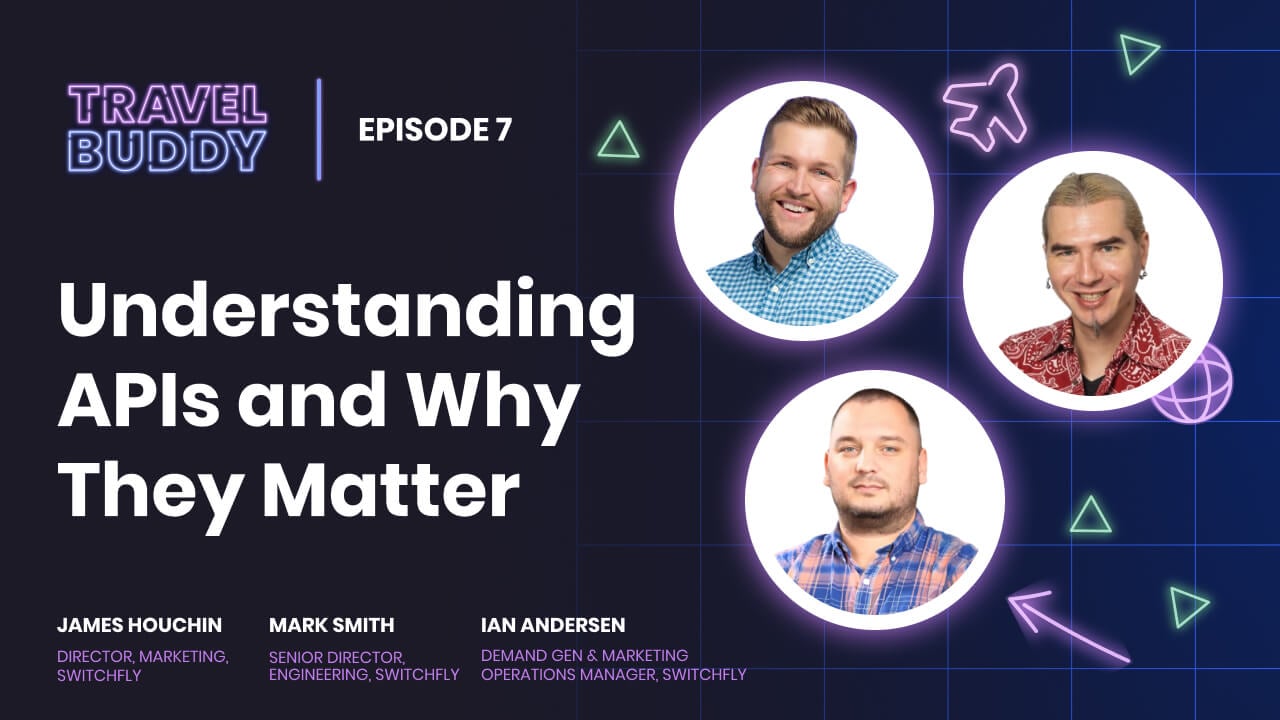
In this episode of the Travel Buddy podcast, hosted by Switc...
In episode five of the Travel Buddy podcast, James and Ian d...
.svg)
.svg)